How Much Money Do You Start With in Monopoly? (2024 Guide)

Ah, Monopoly – the classic board game that has brought families and friends together for generations. There’s nothing like the thrill of rolling the dice, buying properties, and building an empire to crush your opponents.
But have you ever wondered, how much money do you start with in Monopoly? .
This guide will delve into the depths of Monopoly’s various versions and reveal the starting cash amounts, gameplay variations, and strategies to dominate the board.
Classic Monopoly Starting Money
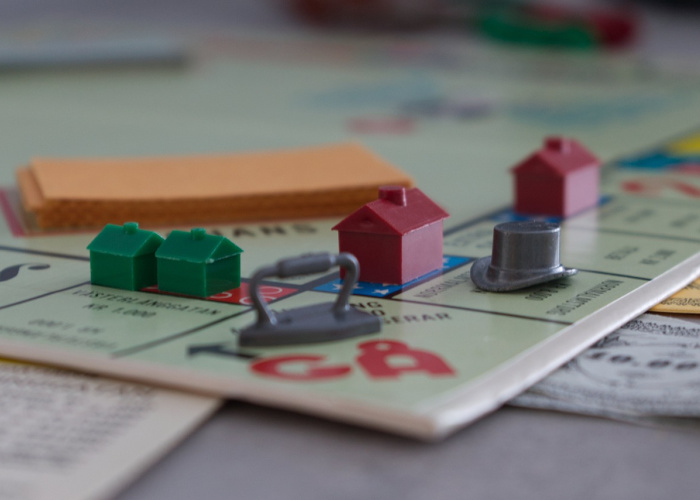
In the classic version of Monopoly, each player starts with $1,500 in Monopoly money, divided into different denominations of bills. The denominations of bills in classic Monopoly are:
- $1
- $5
- $10
- $20
- $50
- $100
- $500
This starting amount remains consistent across various countries, such as the UK version, which uses £1,500, and other countries like Australia and Canada, which also use $1,500 – so, how much money do you start with?
A common house rule in Monopoly is awarding double the money, or $400, when landing on the “Go” space. However, bear in mind that the official Monopoly rules don’t award any money, property, or reward upon landing on the “Free Parking” space.
Monopoly Editions and Their Starting Cash
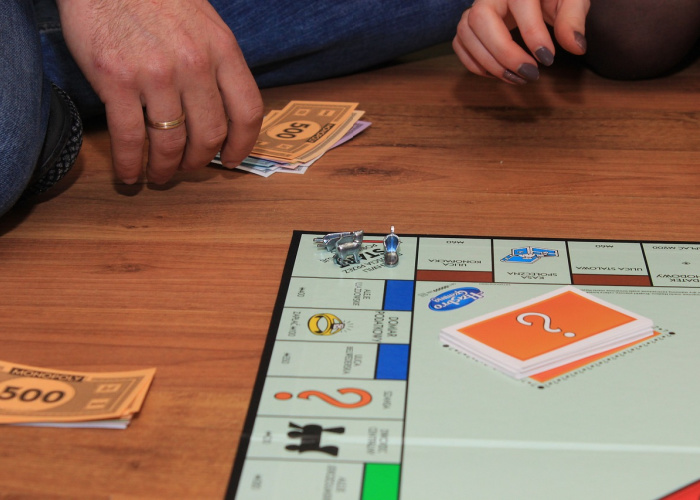
While the classic Monopoly game is undeniably popular, there are numerous other editions that offer unique twists on the original, each with varying amounts of starting money for players, including older monopoly games.
One such version is the Monopoly Cheaters Edition, which adds an interesting layer to the gameplay and strategy, providing new challenges and experiences.
We’ll now delve into the starting cash amounts featured in the Monopoly Speed Die Edition, Monopoly Empire Edition, and Monopoly Junior Edition.
Speed Die Edition
In the Monopoly Speed Die Edition:
- Each player gets a bonus of $1,000 at the outset, summing up to a total of $2,500 in Monopoly money.
- This additional starting cash is intended to expedite the game and make it more dynamic.
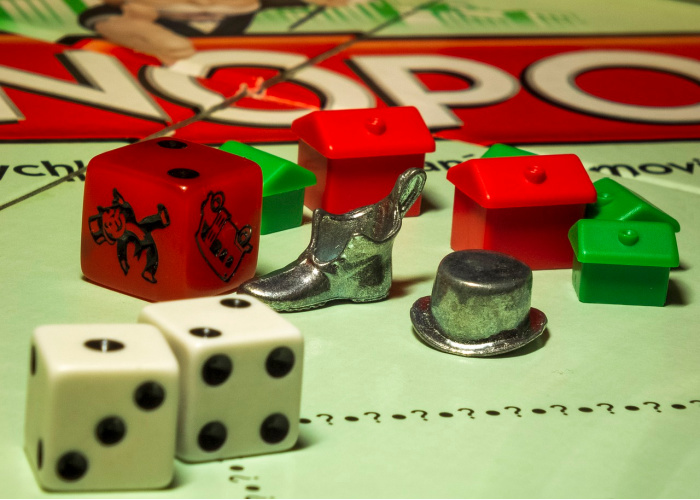
- The Speed Die Edition features a special red die, called the Speed Die, which is rolled along with the regular dice, introducing an additional element of movement to the game.
The Speed Die comprises numbers 1, 2, and 3, as well as symbols representing a bus and Mr. Monopoly. When the Speed Die is rolled, players move the total of all three dice if all the dice have numbers showing, allowing them to traverse the board more quickly and resulting in faster gameplay.
This version sets itself apart from the Monopoly Mega Edition that features additional properties, skyscrapers, and train depots, while offering a unique experience compared to the Monopoly Deluxe Edition.
Monopoly Empire Edition
In Monopoly Empire Edition, players start with a whopping $1,000,000, which includes one $500K, four $100Ks, and two $50Ks. This edition features banknotes in larger denominations, reflecting the much money provided to each player at the beginning of the game. Monopoly Empire Edition offers a unique spin on the traditional board game, with gameplay centered around purchasing brands and earning money from them.
The rules of Monopoly Empire Edition include:
- Shuffling the Empire cards and placing them face down on the board
- Selecting a banker
- Determining the youngest player to start first
- Landing on certain spaces may have specific effects, such as going directly to jail or returning a billboard to the board
- One of the spaces on the board is the Income Tax space, where players can choose to pay a flat fee or a percentage of their total worth.
Junior Edition
Monopoly Junior is a simplified version of the classic Monopoly game, specifically designed for younger players. In Monopoly Junior, the starting money depends on the number of players and is provided in single-dollar banknotes. For example, in Monopoly Junior Frozen Edition, each player is provided with an initial sum of $20.
The regulations for the allocation of funds in Monopoly Junior are as follows: Each participant is provided with five $1 bills, four $2 bills, three $3 bills, one $4 bill, and one $5 bill. The banker is responsible for the distribution of the funds, ensuring a smooth and enjoyable gameplay experience for younger Monopoly enthusiasts.
Monopoly Bank and Distribution

In Monopoly, the banker holds a crucial position, managing the bank, which keeps the cash, Title Deed cards, along with the houses and hotels. The bank provides a player with $200 each time the player passes the “Go” sign, collects cash when a player purchases land, houses or hotels, and distributes Deed cards when the ground is purchased. The bank also collects fines, advances, premiums, and assessments, ensuring a fair gameplay experience for all participants.
For Monopoly games produced prior to 2008, the bank begins with $15,140, while for games produced after September 2008, the bank begins with $20,580. This total amount of money in the bank can range from $15,140 to $20,580, depending on the edition of the game being played.
Should the Monopoly Bank drain its funds, the Banker can issue more by documenting it on any conventional paper. Alternatively, players can acquire additional funds through various means, such as using paper, checkers, or poker chips to represent monetary values, or purchasing more Monopoly cash from a toy store, hobby store, or online.
Landing on Spaces and Financial Consequences

Landing on diverse spaces in Monopoly leads players to confront various financial outcomes like paying rents, taxes, or fines, or even earning bonuses and salaries. For example, when landing on the “Go” space, players are entitled to receive $200. However, landing on the “Free Parking” space does not result in any money, property, or reward being obtained.
The Chance and Community Chest cards in Monopoly serve to provide players with the opportunity to acquire cash or be directed to a space owned by another player, resulting in the payment of rent. Players can also collect rent when other participants land on their properties, but they must request the rent before the next player rolls the dice, or they cannot collect it.
Rolling doubles in Monopoly grants the player an additional turn, allowing them to acquire multiple properties or draw multiple cards by landing on two different spaces. However, should a player roll doubles three times consecutively, they will be deemed to have committed “speeding” and must move their piece directly to the Jail space, ending their turn.
Building Houses and Hotels

Players have the opportunity to increase the rent they receive from others by constructing houses and hotels on their properties, adhering to certain rules and restrictions in the process. Here are the rules for constructing houses:
- Houses can be purchased from the bank and established on properties, with the cost for each house indicated on the Title Deed card.
- It is necessary to construct houses evenly, and only up to four houses can be built on a single property.
- The bank is sometimes out of houses. This means that players must wait until a house becomes available before constructing one.
The advantages of having houses and hotels on properties include the ability to charge double rent for unimproved properties in that color-group, and much higher rents for properties with houses and hotels than for unimproved properties. By strategically building houses and hotels on their properties, players can increase their income and potentially bankrupt their opponents more quickly.
Nevertheless, certain constraints apply to the construction of houses and hotels. Here are the rules:
- All real estate must be face-up and visible to all players.
- Houses and hotels cannot be built on utilities or stations.
- Prior to selling or trading a property with houses, the houses must be returned to the bank at half their value.
Mortgaging Properties
In Monopoly, players can resort to mortgaging properties as a means to generate funds during financial hardships. However, they cannot collect rent on mortgaged properties and must pay interest to lift the mortgage. Unimproved properties may be mortgaged through the Bank at any time, but before mortgaging an improved property, all the buildings on all the properties of its colour-group must be returned to the Bank at half price.
The consequence of mortgaging a property is that rent is not received until the mortgage is lifted. The owner must pay the mortgage amount plus 10% interest to the Bank in order to lift the mortgage. This payment needs to be made immediately. If a player wishes to sell a mortgaged property, they can do so by agreeing on a price with another player, but the player who mortgages the property will retain possession of it, and no other player may acquire it by lifting the mortgage from the Bank.
It is important for players to carefully consider the benefits and drawbacks of mortgaging properties, as doing so may provide short-term financial relief, but it can also limit their income potential in the long run.
Trading and Selling Properties
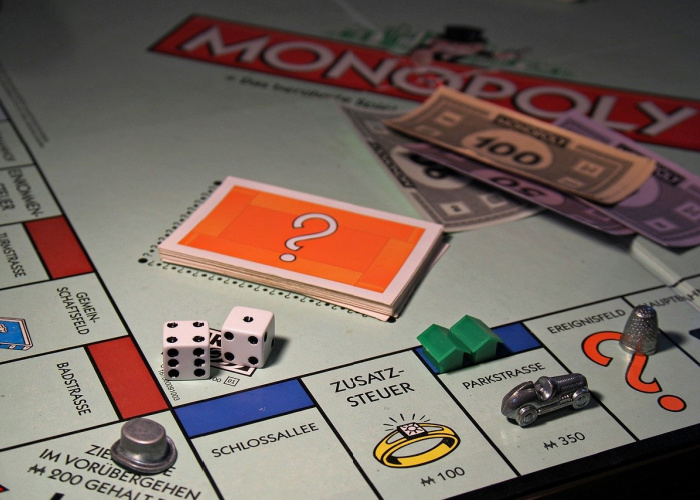
Monopoly allows players to:
- Trade and sell properties, either with other players or the bank, while adhering to a set of specific rules and restrictions
- Trade and sell unimproved properties, railroads, and utilities to any participant
- Not sell properties with buildings to another player
The process of trading properties in Monopoly requires players to negotiate with one another to buy, sell, or exchange properties. All players must agree to the trade, and the conditions of the trade may include properties, money, or a combination of both. Before trading a property with houses, the houses must be returned to the bank at half their value.
When selling properties back to the bank in Monopoly, players can obtain half of their original purchase value. However, there is a fifty percent penalty for selling houses back to the bank. Players should carefully weigh the benefits and risks of trading and selling properties, as these decisions can greatly impact their overall strategy and success in the game.
Bankruptcy and Loans

When a player is unable to settle their debts, bankruptcy ensues, leading to the loss of properties and subsequent elimination from the game. This can happen when a player is unable to pay rent, taxes, or fines, or when they cannot afford to purchase properties or build houses and hotels. To avoid bankruptcy, players can mortgage properties to raise funds.
Loans can be taken from the bank by mortgaging properties. The mortgage value is printed on each property’s Title Deed card, and players must pay the mortgage amount plus 10% interest to the Bank to lift the mortgage. Players should be cautious when taking loans, as doing so may provide temporary financial relief but can also limit their income potential in the long run.
When a player becomes bankrupt, the individual who obtains possession of the mortgaged properties must promptly pay 10% interest on the mortgage value. Furthermore, the bankrupt player’s “Get Out of Jail Free” card, if they have one, may be sold to another player at an agreed-upon price. Bankruptcy can be a significant setback in Monopoly, so players should carefully manage their finances to avoid this unfortunate outcome.
Short Game and Time-Limited Variations

For players looking to enjoy the thrill of Monopoly without a lengthy commitment, alternative variations like short games or time-limited games are available. These not only reduce the game’s duration but also introduce new challenges. The short game variation of Monopoly involves:
- Players immediately paying the Bank the cost of the properties dealt with them
- Requiring only three houses to acquire a hotel
- Ending the game after the second bankruptcy
In time-limited variations, the aim is to be the wealthiest player at a pre-determined time. This adds an element of urgency to the game, as players must quickly strategise and make decisions to maximise their wealth within the allotted time frame. These alternative game variations can provide a fresh and exciting experience for both new and seasoned Monopoly players.
Engaging in a short game or time-limited variation of Monopoly serves as a great introduction for newcomers, or a quick round of fun with friends and family. No matter which variation you choose to start with in Monopoly, the core principles remain the same: buy properties, build your empire, and dominate the board. After all, it’s just a game meant to bring enjoyment and friendly competition when you play Monopoly.
Final Thoughts
Monopoly offers a wealth of options when it comes to starting money and game variations, providing players with a diverse and enjoyable gaming experience. From the classic Monopoly starting money of $1,500 to the various editions with unique starting cash amounts and gameplay twists, there is something for everyone in this timeless board game.
Whether you’re a seasoned Monopoly player or new to the game, exploring the different editions and variations can breathe fresh life into your board game nights and create countless memorable moments with friends and family.

Frequently Asked Questions
In this section we answer your frequently asked questions about playing Monopoly.
How much money do you start with in Monopoly here and now?
You start with $15 million in Monopoly Here and Now, which is divided into various denominations such as 2 each of $5,000,000s, $1,000,000s, and $500,000s; 6 $200,000s; and 5 each of $100,000s, $50,000s, and $10,000s.
How do you play Monopoly?
To play Monopoly, each player takes turns rolling the dice and moving their token in the direction of the indicated arrows on the board. They move the corresponding number of spaces clockwise after adding the result of the dice roll.
How much money do you start with in life?
You start with $10,000 when playing the game as the banker gives each player that amount. Additionally, you can also choose a car and fit a people peg into the driver’s seat.
What are the starting money amounts in various Monopoly editions?
Monopoly starting money amounts vary depending on the edition, with $2,500 in the Monopoly Speed Die Edition, $1,000,000 in the Monopoly Empire Edition, and varying amounts in Monopoly Junior according to the number of players.
How does mortgaging properties work in Monopoly?
In Monopoly, players can mortgage their unimproved properties to raise funds. However, they cannot collect rent on the mortgaged properties and must pay an interest fee in order to lift the mortgage.
